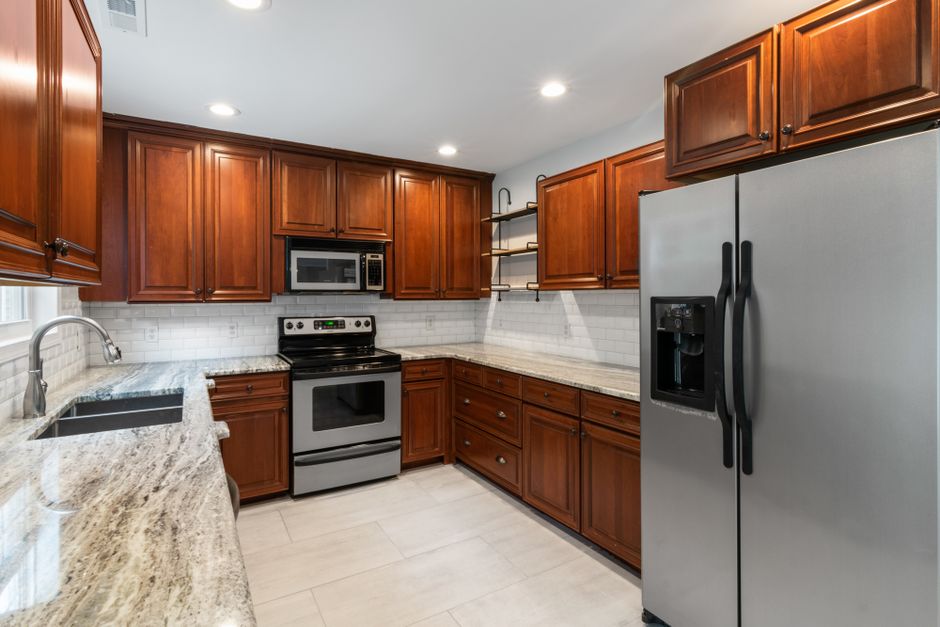
Countertops in Louisville, KY
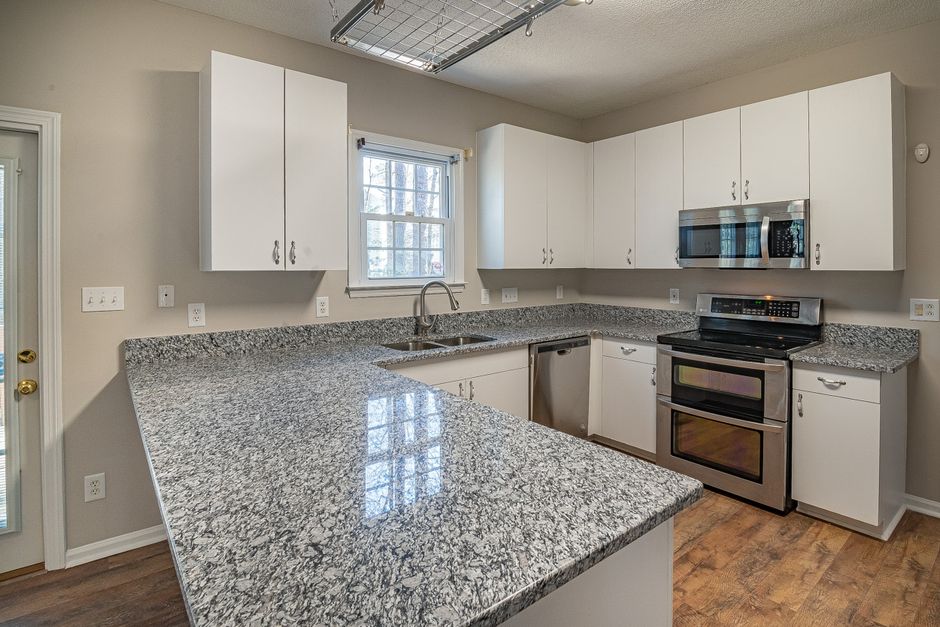
Plain answers for Louisville homeowners planning new countertops, from templating day to daily care in humid Ohio River summers and cold winter installs across Jefferson County.
What We Cover
- How to Choose a Countertop Installer Questions to ask about slab viewing, seam layout, templating, cleanup and plumbing before you hire.
- Which Countertop Material Fits Your Kitchen How granite, quartz, marble, laminate, solid surface and butcher block differ in care, durability and repair.
- Why Countertops Crack, Stain or Swell The common causes behind cracks, lifted seams, etching, stains and swollen laminate, and what each one means.
- What Happens During a Countertop Installation A step by step look at templating, fabrication, seams, sink mounting and plumbing reconnection.
- How to Prepare Your Kitchen for New Countertops What to clear, disconnect and have on site before templating and install day so the job goes smoothly.
- How Louisville Weather Affects Countertop Installs Why humid Ohio River summers and cold winter days matter for adhesives, wood tops and slab handling.
Countertops in Louisville, KY
A countertop in Louisville is a slab, a substrate and a set of seams that has to sit flat in a house that rarely is. From the Highlands to the streets near Churchill Downs, Jefferson County homes run from old brick to newer builds, and each one asks for a different layout, support plan and sequence of work.
The surface is only the visible part. Cabinets, sink cutouts, backsplash edges and wall lines decide whether the finished top looks right or fights the room.
Older Homes and Uneven Rooms
Many older Jefferson County houses have floors that have settled and walls that are out of plumb. Expect the crew to measure twice, scribe tops to the wall and shim cabinets until the run is level. A level top on a sagging floor means small gaps at the wall, which get filled and finished cleanly.
A template is taken after the cabinets are set and fixed. Guessing from a drawing in a house like this is how a slab ends up rocking or leaving a hairline gap along the backsplash.
Weather in the Ohio River Valley
Humid summers and cold winter days both change how a job goes. Moisture lingers in wood cabinets and adhesives cure slower in damp air, while cold mornings stiffen sealants and make a driveway or porch a rough place to carry stone. Near Waterfront Park the river air stays heavy through July and August.
Crews plan around this by keeping materials dry, letting adhesives and caulk reach working temperature, and protecting the route from truck to kitchen. Seams and joints get extra attention when the house is either damp or cold.
Choosing and Living With a Top
Material choice comes down to how the kitchen is used. A family that cooks daily near the Louisville Slugger Museum crowd on a game weekend needs something different from a rarely used galley. Heat, scratches, standing water and heavy pots all matter, and so does how much upkeep you want to do.
Cracks, stains and swelling usually trace back to weak support, trapped moisture or the wrong sealer, not bad luck. Knowing that early saves rework.
Guides
The guides on this site cover preparing your kitchen, matching material to your kitchen, what happens on install day, how Louisville weather affects installs, why countertops crack, stain or swell, and how to choose an installer.
Latest Guides
How to Pick a Backsplash That Works With Your Countertop in Louisville
A backsplash works with your countertop when one of them stays quiet, their undertones agree, and the tile runs to a sensible height. Those three checks settle most decisions, and the rest is detail: grout, edges, outlets and the condition of the wall behind it all. In Louisville, where so many kitchens sit inside older brick and plaster houses, that last point deserves more attention than it usually gets.
Start With the Countertop, Then Let It Lead
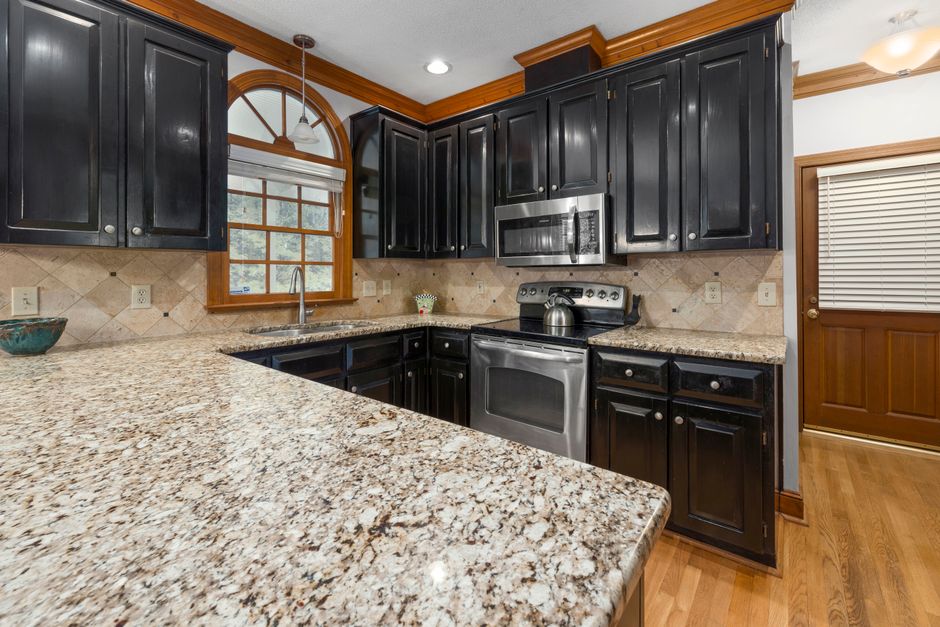
The countertop is the larger surface, the harder one to replace, and the one that should set the palette. Pick it first. Then take a real offcut or a large sample to the tile showroom instead of relying on a photo or a memory of the color. A small chip hides the veining, speckle and undertone that you will live with across several feet of counter.
Be wary of the idea that the backsplash has to be the same material or the exact same color. It does not. Some of the best kitchens pair a stone or engineered stone top with a tile that shares nothing with it but a quiet agreement of tone.
Let Only One Surface Be Busy
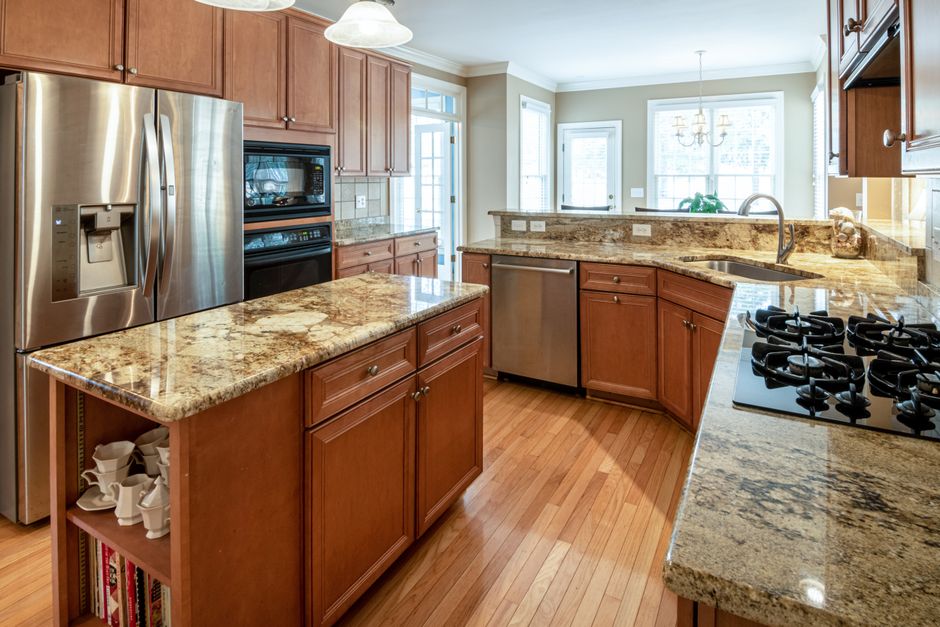
A kitchen reads as calm when one surface carries the pattern and the other steps back.
- Busy counter, quiet backsplash. Heavily veined granite, marble-look engineered stone, or a speckled slab pairs best with a plain tile in a single consistent color and finish.
- Quiet counter, expressive backsplash. A solid color engineered stone or solid surface top leaves room for pattern, texture or color on the wall.
If both surfaces compete, the eye has nowhere to rest, and the kitchen feels smaller than it is.
Borrow a Secondary Tone, Not the Main One
Trying to match the dominant background color of a countertop usually backfires. A tile that is nearly the same shade, but slightly off, looks like a mistake. Two moves look deliberate instead:
- Echo a secondary tone. Pull the tile color from a vein, a fleck or an undertone in the counter.
- Contrast clearly. Choose a tile that is plainly lighter, darker or different in hue.
Check undertones, not color names
Whites and grays lean warm (cream, beige) or cool (blue, true gray). A warm white tile beside a cool white quartz looks dingy, even though both are called white. Lay the samples side by side on the counter and compare them directly.
Judge Samples in Your Own Kitchen
Showroom lighting is not kitchen lighting. Window direction, bulb color temperature and under cabinet LED strips all shift how stone and tile read. Leave the samples propped against the wall at the counter for a day, and look at them in the morning and again in the evening with the lights on. A pairing that matches under showroom fluorescents can clash at home.
Choose the Material for the Job Behind It
The wall behind the range and sink takes the most abuse, so cleanability should drive the choice there.
Behind the range
- Engineered stone contains resin binders and can scorch or discolor under high direct heat. It is not heatproof. Behind a powerful range, keep proper clearance, check the maker's care guidance for your product, or use ceramic, porcelain or metal.
- Solid surface can be formed with an integral coved backsplash with no seam at the counter, which makes wiping easy. It is also heat sensitive, so it is a poor choice directly behind a cooktop.
- Polished marble and other soft stone etches from lemon, vinegar and tomato splatter, which matters most near the prep area and the stove.
- Heavily textured or handmade tile looks good but traps grease.
Around the sink
- Glass tile is nonporous and reflects light, but clear or translucent glass shows the adhesive behind it. Installers should use a white setting material made for glass and comb it carefully so trowel lines do not telegraph through. Cut edges need finishing or trim.
- Natural stone tile such as marble, travertine or limestone is porous and needs sealing, much like a stone countertop. Save the delicate and porous materials for walls that stay dry.
No stone, quartz or tile backsplash is maintenance free or stain proof. Smooth, nonporous surfaces with few grout lines simply clean fastest where splatter lands.
Treat Grout as a Design Decision
Matching the grout to the tile reads calm and lets the surface look continuous. Contrasting grout draws out the grid and the pattern, which suits a simple subway layout but can look busy next to a veined counter. Light cement grout behind the sink and range picks up stains. Stain resistant grout products, or sealing standard cement grout, make pale colors more practical, though sealed grout can still stain and needs periodic attention.
Decide on Height Early
The usual run is from the countertop to the underside of the upper cabinets. Behind the range, carry the backsplash up to the hood. Where a wall has no uppers, stop at a logical line: the window casing, the top of an adjacent cabinet or the ceiling. A tile that ends at a random height looks unfinished.
Skip the stub if you can
The traditional 4 inch splash cut from the countertop slab is fine on its own, but it is not required and is not always right. Tile stacked above a stub often looks dated and adds an extra joint. A cleaner approach is to leave the stub off and run tile, or slab, straight down to the counter.
Full height slab
A slab backsplash in the same material as the counter makes a seamless look, but it has to be planned with the fabricator before anything is cut. Vein direction, seam locations and outlet cutouts are all laid out on the slab. Ask whether the backsplash pieces will come from the same slab as the countertop, so the color and pattern carry through.
Check the Wall Before Committing to Rigid Material
Plaster walls in Old Louisville Victorians, Highlands and Crescent Hill houses, and the shotguns of Germantown and Schnitzelburg, are often out of plumb and out of flat. A full height slab will not sit tight against any wall, and old plaster is the hardest test of that.
Hold a 4 foot straightedge against the wall where the backsplash will go. Gaps behind it show up as trouble later: a stiff slab will not seat, and large format tile will show lippage, the small ridges where neighboring tiles sit at different heights.
- Large format tile means fewer grout lines and easier cleaning, but it demands a flatter wall.
- Small mosaics hide wall wobble but add a lot of grout to keep clean.
- Skim coating the wall flat first opens the door to larger pieces.
Sequence and Details That Prevent Regrets
Counter first, tile second
The fabricator templates after the kitchen cabinet boxes are set, and the tile goes on after the countertop is in place. Tiling first leaves gaps and uneven lines at the bottom edge.
Seal the joint with caulk, not grout
Where the backsplash meets the countertop, use a flexible, color matched silicone or caulk. The counter and the wall move independently, and a grouted joint there tends to crack and let water in behind the tile.
This matters most with wood. Butcher block swells and shrinks with Louisville's humid summers and dry, heated winters, and sealing does not stop that movement. Leave a flexible caulked joint, never butt rigid tile tight against the wood, and keep the area behind the sink well sealed.
Plan the ends and the outlets
Exposed tile edges need bullnose pieces, a finished edge or metal trim. The cleanest stopping points are cabinet sides, wall corners and window casings. A slab or thick tile layer can also recess outlet boxes, so have an electrician extend or reposition them. Some homeowners move outlets under the upper cabinets so the tile stays uninterrupted. Slab cutouts must be laid out before fabrication.
Order extra from one dye lot
Color varies between production lots, and matching later can be impossible. Buy enough from a single lot to cover cuts and breakage, plus a few spares for future repairs.
Leave the cutting to the fabricator
Cutting engineered stone releases fine crystalline silica dust (silicon dioxide), which causes silicosis. Backsplash pieces and outlet cutouts should be cut by the fabricator with wet cutting and dust control. Do not dry cut quartz in your kitchen with a grinder, and do not assume a man made stone is safe to cut at home.
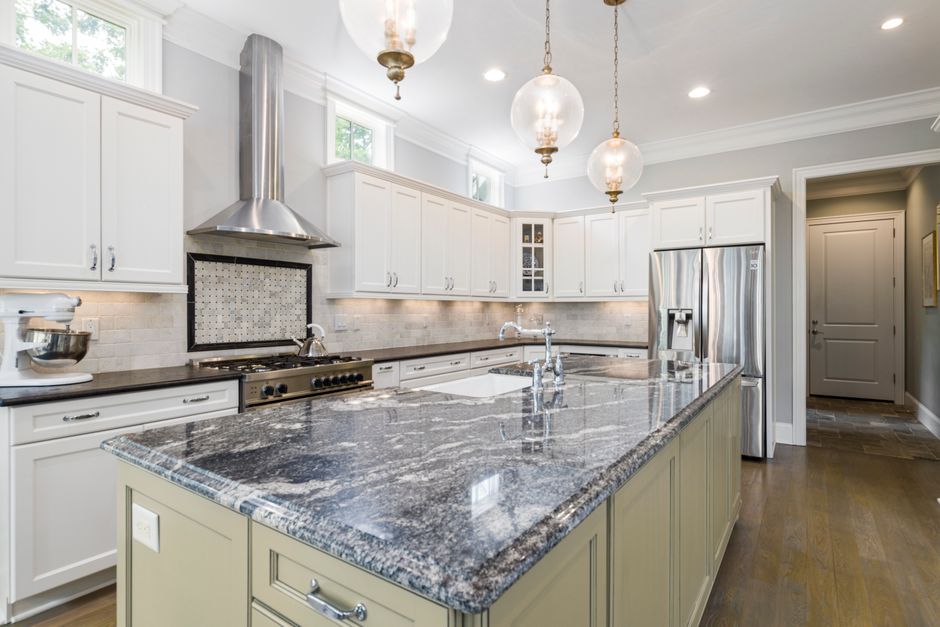
Safest Way to Clean a Stone Countertop Daily in Louisville
The safest daily cleaner for a stone countertop in Louisville is warm water, a few drops of mild fragrance-free dish soap and a soft microfiber cloth, followed by a plain-water rinse and a full dry. That one routine is safe for granite, marble and quartz. What changes from stone to stone is the list of things you must keep away from the surface.
The Routine That Works on Every Stone

Start by clearing crumbs and grit with a dry cloth. Dragging sand, salt or sugar crystals across a polished top under a wet cloth leaves fine scratches, so lift the debris first.
Then follow four steps:
- Wipe with a microfiber cloth wrung out in warm, lightly soapy water.
- Rinse by wiping again with a cloth dampened in plain water.
- Dry with a clean, soft cloth.
- Move on without spraying anything else.
The drying step matters more in Louisville than most people expect. Tap water here comes from the Ohio River, and the region sits on limestone geology, so water left to evaporate leaves mineral spots and rings. They show up most on dark polished granite and dark quartz, where a dull ring stands out against the shine.
Why the Stone Type Changes the Rules
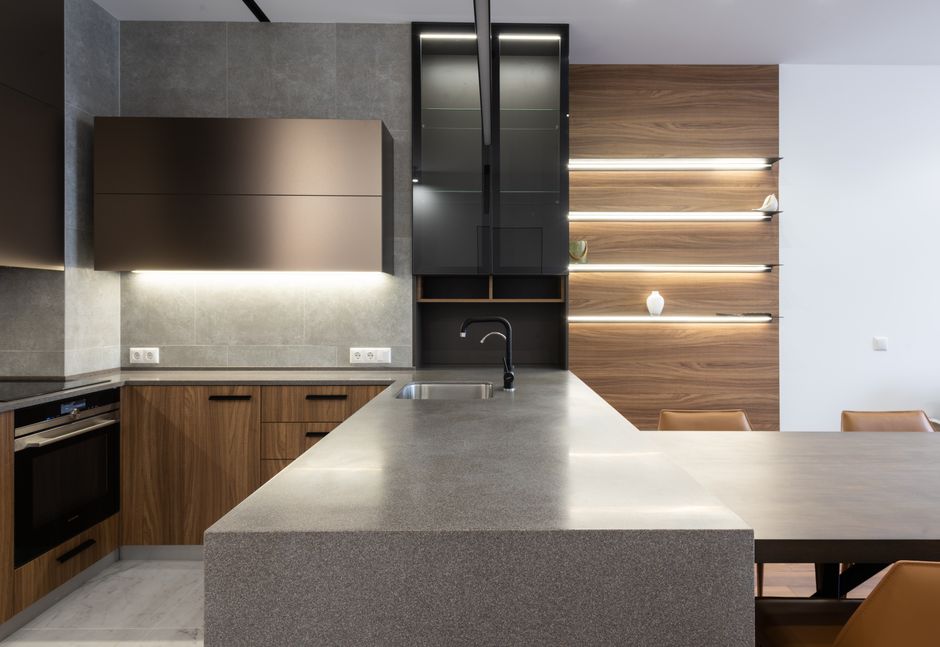
Granite, marble and quartz look similar from across the room, but they are made of different things, and that decides what hurts them.
Marble: Acid Is the Enemy
Marble is mostly calcium carbonate. Lemon juice, vinegar, tomato, wine, soda and citrus cocktail mixers react with it chemically and leave dull, rough patches called etching. Etching is damage to the surface itself, not a stain, so it cannot be wiped or scrubbed away, and sealer does not prevent it.
That is why the glass and multi-surface sprays under many sinks are a poor fit for marble. Many contain ammonia or vinegar. Soap and water does the job without the risk.
Granite: Tougher, Not Invincible
Granite is built from silicate minerals such as quartz and feldspar, and it handles household acids far better than marble. The weak point is the sealer. Repeated use of harsh acidic or strongly alkaline cleaners can wear it down and dull some stones over time. Because soap and water already works, there is no reason to take that chance.
Quartz: Protect the Resin
Quartz countertops are engineered stone, crushed quartz held together with polymer resin. The resin is the vulnerable part. Oven cleaner, paint stripper, drain cleaner, strong solvents and undiluted bleach can discolor or dull it. Follow the fabricator's care sheet, whether the slab is Cambria or another brand, and keep harsh chemicals off it entirely.
Tools to Leave in the Cabinet
Scouring powder, steel wool, green scrub pads and melamine foam sponges are all abrasive. On polished granite, marble or quartz they can haze the finish gradually, and the damage tends to go unnoticed until the light hits at an angle. Honed marble hides this wear a little better, but it still loses its even look.
Skip the store-bought "polishes" that leave a waxy shine, too. They build up, attract smudges and can hide the true condition of the sealer. A clean, dry surface is the shine.
Handling Spills and Derby Season Gatherings
Spills are where most lasting damage starts. Oil, butter and cooking grease darken light granite and marble. Wine, coffee, tea and berries leave organic stains. Wipe any spill right away, rinse with plain water and dry.
Gatherings raise the stakes. During Derby season, with mint juleps, citrus mixers and soda on every surface, put drinks on coasters or a tray when the top is marble. Leaving a spill until the next morning is how most etch rings happen.
If a stain does set in, rubbing harder with an abrasive usually wrecks the polish without lifting anything. A poultice made for your stone type can draw out set-in oil or organic stains over a day or two, especially on light stone.
Dealing With Mineral Spots Safely
If spots have already built up, resist the urge to reach for vinegar or a lime and scale remover. Both are acidic and will etch marble and other calcite-based stone. Use a cleaner labeled pH-neutral and stone-safe, then buff the surface dry. After that, drying each day keeps the problem from returning.
Sanitizing After Raw Meat
Bleach is not required to make stone food-safe. After handling raw meat, wash first with soap and water. Then use a disinfectant that your stone or quartz manufacturer approves. A diluted isopropyl alcohol and water spray is widely used on sealed granite and quartz. Rinse food prep areas afterward.
Sealing: Let a Water Test Decide
Granite and marble may need sealing. Quartz does not, because it is non-porous. Putting stone sealer on quartz can leave a hazy film that has to be stripped off.
To check natural stone, place a few drops of water on the busiest spots, such as beside the sink and near the stove. If the water beads, the sealer is working. If the stone darkens within several minutes, it is time to reseal.
Sealing intervals depend on the stone, not the calendar. Dense dark granites may rarely absorb water at all, while light, porous granites and marble absorb faster. Skip any fixed monthly or yearly schedule and let the test tell you.
Heat, Knives and Everyday Habits
- Trivets: Use them for hot pans on all three surfaces, and be strictest on quartz. Sudden heat can scorch or discolor the resin, and it can thermally shock any stone, especially near seams and sink cutouts.
- Cutting boards: Use one every time. Knives dull quickly on granite and quartz, marble scratches easily, and cut lines collect grime that daily wiping will not remove.
- Dry objects only: Do not leave wet sponges, dish racks or soap bottles sitting on stone. Louisville's humid summers keep surfaces damp longer, and trapped moisture under objects causes rings and mildew along caulk lines.
The Edges Most People Forget
Check the undermount sink edge and the backsplash joint. Standing water there feeds mineral buildup and can wear down caulk. Dry those areas as part of the routine. If caulk cracks or turns moldy, replace it rather than scrubbing it with bleach.
Older Homes and Original Marble
Many houses in Old Louisville, the Highlands and Crescent Hill still have original or salvaged marble on vanities, tabletops and washstands. Treat old marble as unsealed and acid-sensitive until a water test proves otherwise. Use only soap, water and a soft cloth, and keep toiletries, perfume and citrus cleaners off it.
Chips Are a Job for a Fabricator
If a chip appears in granite or quartz, do not grind, sand or polish it out with power tools. The dust contains crystalline silica, which can cause silicosis, and engineered quartz is especially high in silica. A fabricator with proper dust control should handle those repairs.
The Short Version of the Habit
Wipe grit away, wash with warm soapy water, rinse, dry, and keep acids off marble. Consistency with a soft cloth does more for a stone countertop than any specialty product.