Safest Way to Clean a Stone Countertop Daily in Louisville

The safest daily cleaner for a stone countertop in Louisville is warm water, a few drops of mild fragrance-free dish soap and a soft microfiber cloth, followed by a plain-water rinse and a full dry. That one routine is safe for granite, marble and quartz. What changes from stone to stone is the list of things you must keep away from the surface.
The Routine That Works on Every Stone

Start by clearing crumbs and grit with a dry cloth. Dragging sand, salt or sugar crystals across a polished top under a wet cloth leaves fine scratches, so lift the debris first.
Then follow four steps:
- Wipe with a microfiber cloth wrung out in warm, lightly soapy water.
- Rinse by wiping again with a cloth dampened in plain water.
- Dry with a clean, soft cloth.
- Move on without spraying anything else.
The drying step matters more in Louisville than most people expect. Tap water here comes from the Ohio River, and the region sits on limestone geology, so water left to evaporate leaves mineral spots and rings. They show up most on dark polished granite and dark quartz, where a dull ring stands out against the shine.
Why the Stone Type Changes the Rules
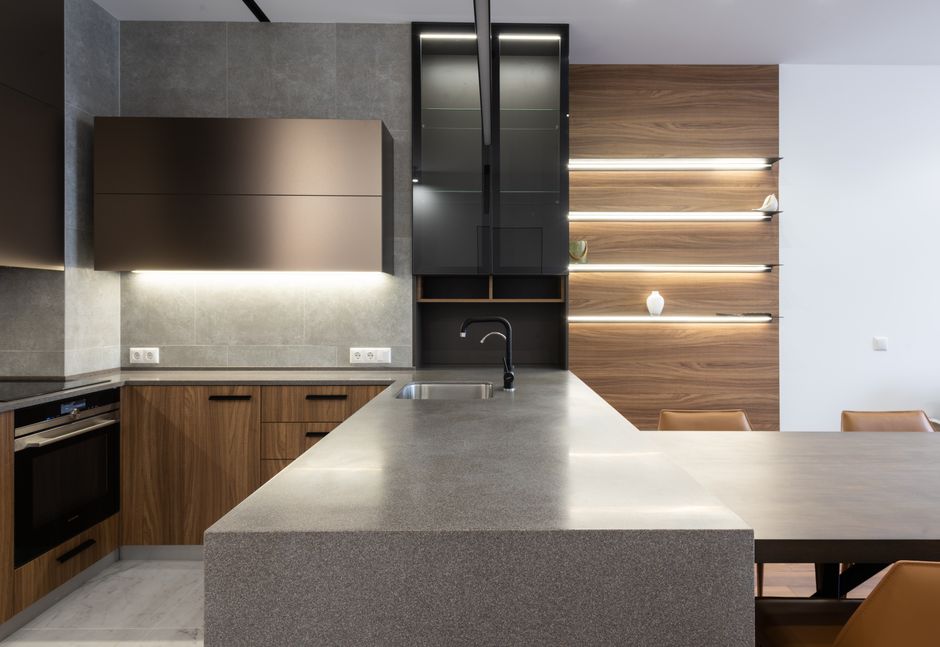
Granite, marble and quartz look similar from across the room, but they are made of different things, and that decides what hurts them.
Marble: Acid Is the Enemy
Marble is mostly calcium carbonate. Lemon juice, vinegar, tomato, wine, soda and citrus cocktail mixers react with it chemically and leave dull, rough patches called etching. Etching is damage to the surface itself, not a stain, so it cannot be wiped or scrubbed away, and sealer does not prevent it.
That is why the glass and multi-surface sprays under many sinks are a poor fit for marble. Many contain ammonia or vinegar. Soap and water does the job without the risk.
Granite: Tougher, Not Invincible
Granite is built from silicate minerals such as quartz and feldspar, and it handles household acids far better than marble. The weak point is the sealer. Repeated use of harsh acidic or strongly alkaline cleaners can wear it down and dull some stones over time. Because soap and water already works, there is no reason to take that chance.
Quartz: Protect the Resin
Quartz countertops are engineered stone, crushed quartz held together with polymer resin. The resin is the vulnerable part. Oven cleaner, paint stripper, drain cleaner, strong solvents and undiluted bleach can discolor or dull it. Follow the fabricator's care sheet, whether the slab is Cambria or another brand, and keep harsh chemicals off it entirely.
Tools to Leave in the Cabinet
Scouring powder, steel wool, green scrub pads and melamine foam sponges are all abrasive. On polished granite, marble or quartz they can haze the finish gradually, and the damage tends to go unnoticed until the light hits at an angle. Honed marble hides this wear a little better, but it still loses its even look.
Skip the store-bought "polishes" that leave a waxy shine, too. They build up, attract smudges and can hide the true condition of the sealer. A clean, dry surface is the shine.
Handling Spills and Derby Season Gatherings
Spills are where most lasting damage starts. Oil, butter and cooking grease darken light granite and marble. Wine, coffee, tea and berries leave organic stains. Wipe any spill right away, rinse with plain water and dry.
Gatherings raise the stakes. During Derby season, with mint juleps, citrus mixers and soda on every surface, put drinks on coasters or a tray when the top is marble. Leaving a spill until the next morning is how most etch rings happen.
If a stain does set in, rubbing harder with an abrasive usually wrecks the polish without lifting anything. A poultice made for your stone type can draw out set-in oil or organic stains over a day or two, especially on light stone.
Dealing With Mineral Spots Safely
If spots have already built up, resist the urge to reach for vinegar or a lime and scale remover. Both are acidic and will etch marble and other calcite-based stone. Use a cleaner labeled pH-neutral and stone-safe, then buff the surface dry. After that, drying each day keeps the problem from returning.
Sanitizing After Raw Meat
Bleach is not required to make stone food-safe. After handling raw meat, wash first with soap and water. Then use a disinfectant that your stone or quartz manufacturer approves. A diluted isopropyl alcohol and water spray is widely used on sealed granite and quartz. Rinse food prep areas afterward.
Sealing: Let a Water Test Decide
Granite and marble may need sealing. Quartz does not, because it is non-porous. Putting stone sealer on quartz can leave a hazy film that has to be stripped off.
To check natural stone, place a few drops of water on the busiest spots, such as beside the sink and near the stove. If the water beads, the sealer is working. If the stone darkens within several minutes, it is time to reseal.
Sealing intervals depend on the stone, not the calendar. Dense dark granites may rarely absorb water at all, while light, porous granites and marble absorb faster. Skip any fixed monthly or yearly schedule and let the test tell you.
Heat, Knives and Everyday Habits
- Trivets: Use them for hot pans on all three surfaces, and be strictest on quartz. Sudden heat can scorch or discolor the resin, and it can thermally shock any stone, especially near seams and sink cutouts.
- Cutting boards: Use one every time. Knives dull quickly on granite and quartz, marble scratches easily, and cut lines collect grime that daily wiping will not remove.
- Dry objects only: Do not leave wet sponges, dish racks or soap bottles sitting on stone. Louisville's humid summers keep surfaces damp longer, and trapped moisture under objects causes rings and mildew along caulk lines.
The Edges Most People Forget
Check the undermount sink edge and the backsplash joint. Standing water there feeds mineral buildup and can wear down caulk. Dry those areas as part of the routine. If caulk cracks or turns moldy, replace it rather than scrubbing it with bleach.
Older Homes and Original Marble
Many houses in Old Louisville, the Highlands and Crescent Hill still have original or salvaged marble on vanities, tabletops and washstands. Treat old marble as unsealed and acid-sensitive until a water test proves otherwise. Use only soap, water and a soft cloth, and keep toiletries, perfume and citrus cleaners off it.
Chips Are a Job for a Fabricator
If a chip appears in granite or quartz, do not grind, sand or polish it out with power tools. The dust contains crystalline silica, which can cause silicosis, and engineered quartz is especially high in silica. A fabricator with proper dust control should handle those repairs.
The Short Version of the Habit
Wipe grit away, wash with warm soapy water, rinse, dry, and keep acids off marble. Consistency with a soft cloth does more for a stone countertop than any specialty product.